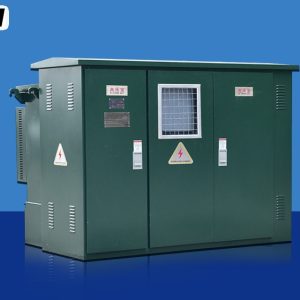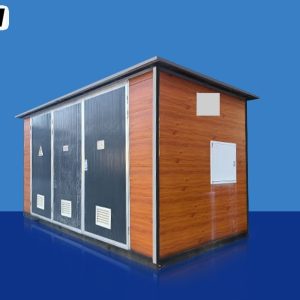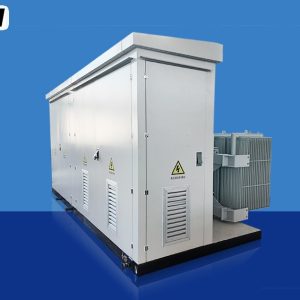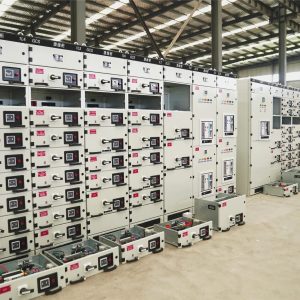
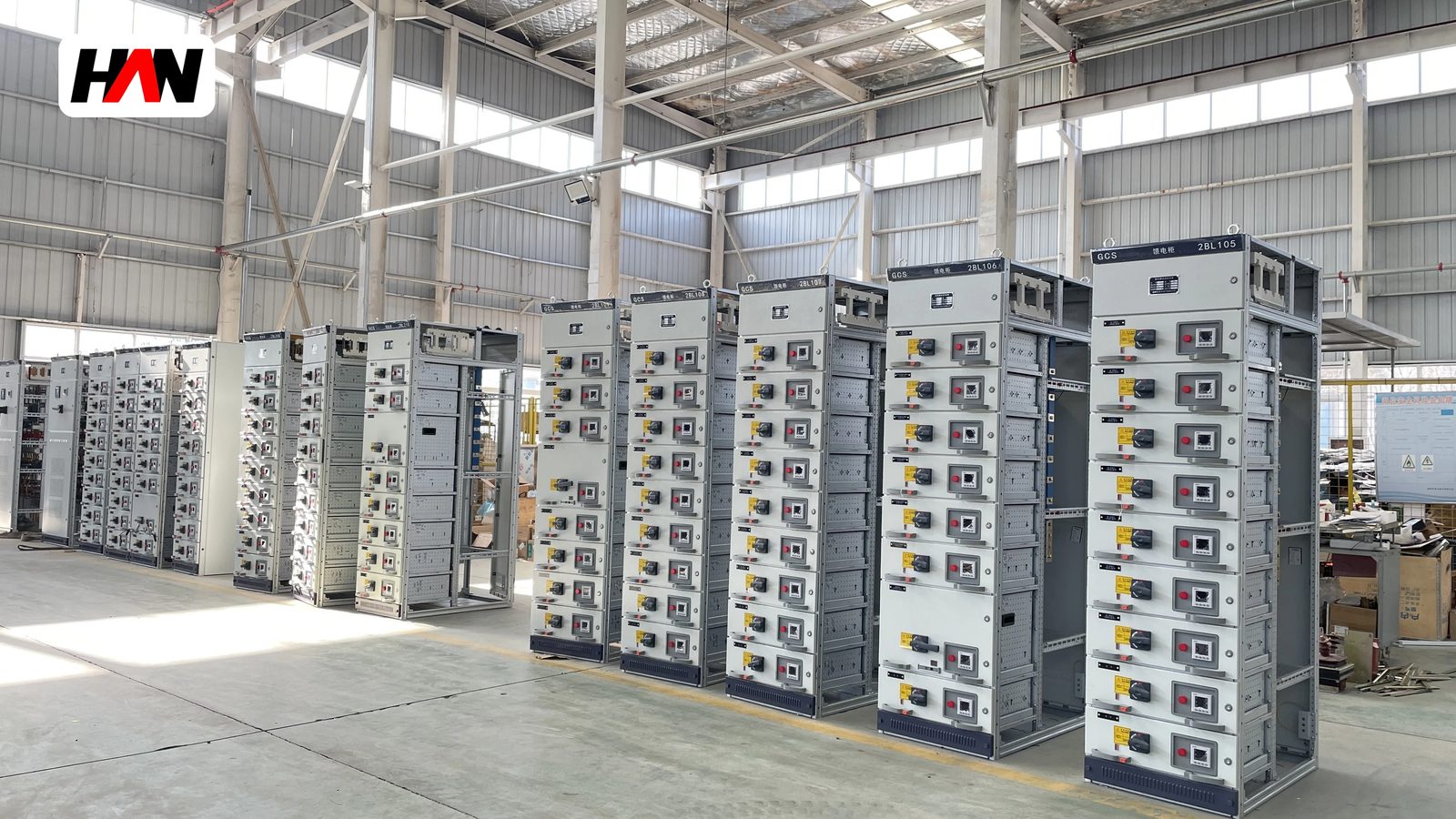
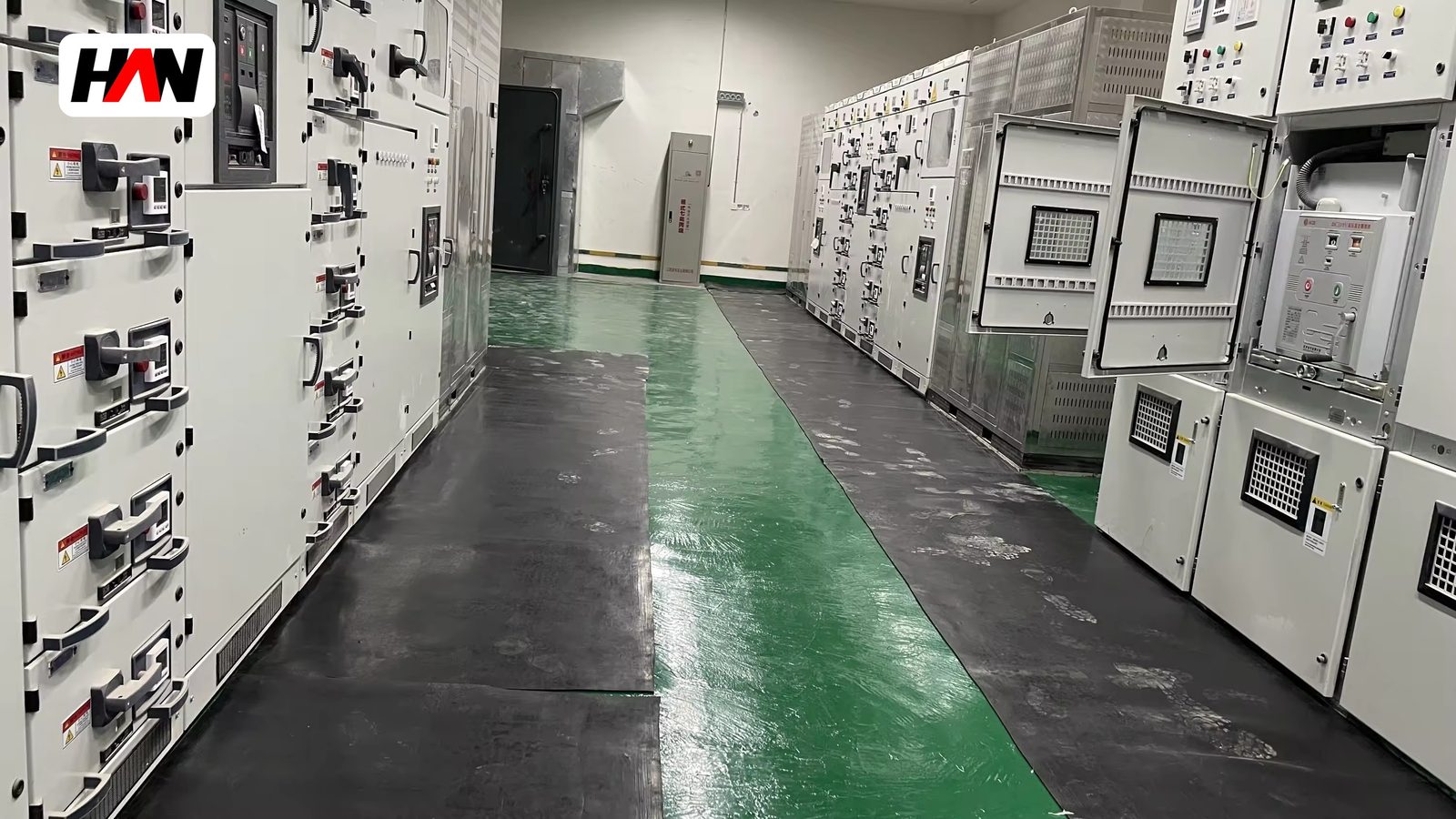
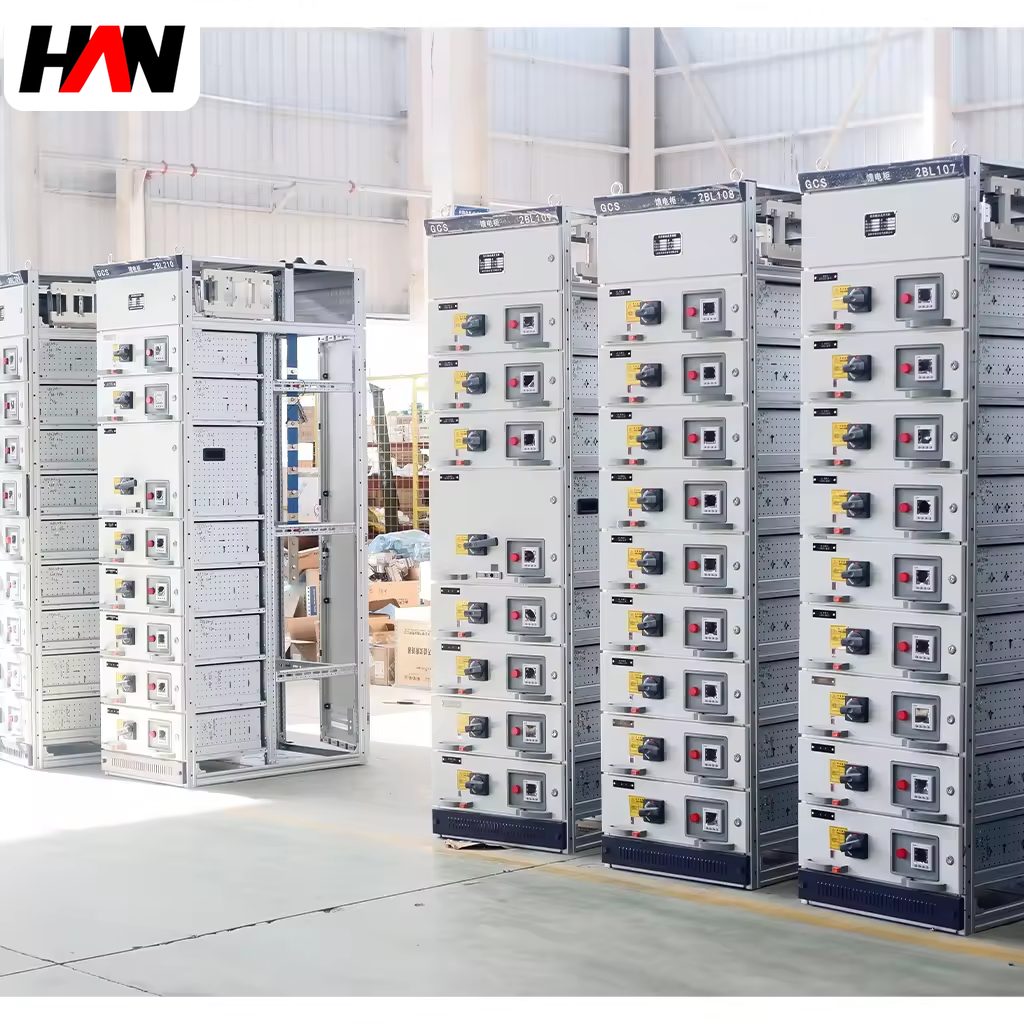
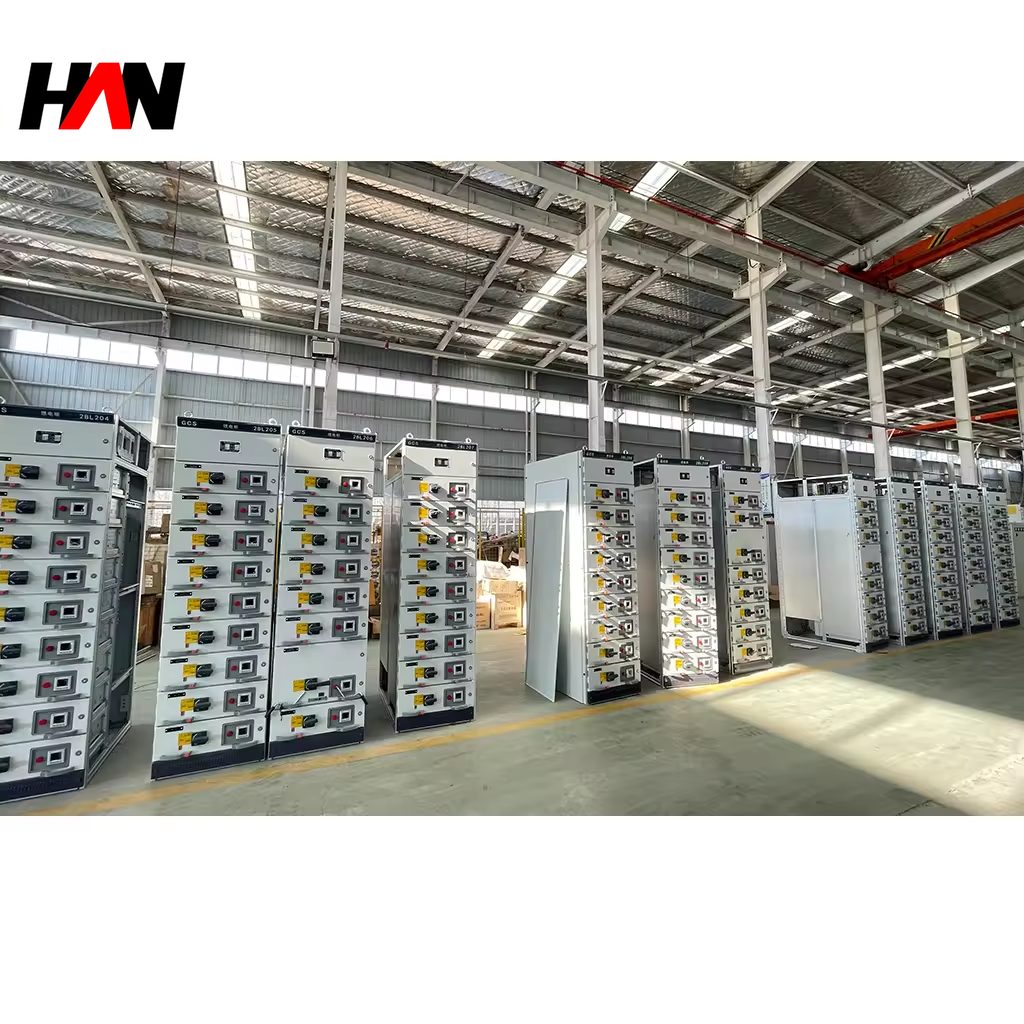
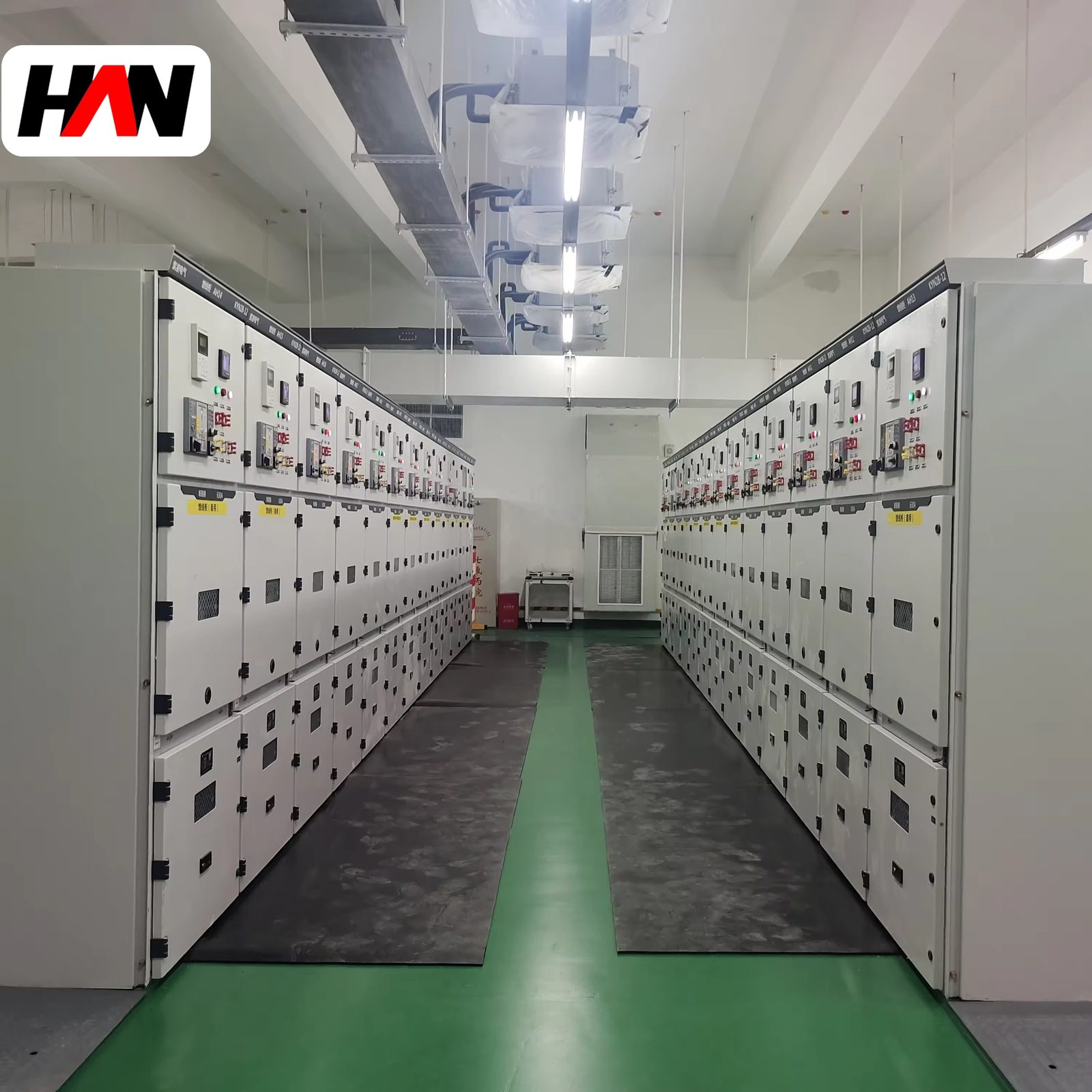
A medium-voltage distribution cabinet built around a stainless steel shell with an IP65 rating is answering a different question from the one a utility switch room answers. It is not trying to be maintainable in a warm, dry building. It is trying to survive a place where the air carries cement dust, coal dust, salt or acid mist, where the temperature swings between a hot afternoon and a cold night, and where the cabinet may sit under a conveyor or beside a mill for twenty years with nobody opening the door except once a year.
This family covers nominal systems at 6.3 kV, 6.6 kV, 10 kV, 11 kV and 13.8 kV, with busbar currents up to 2 000 A, and it is built to IEC 62271-200. Those five voltages are not one equipment class but three, which is the first thing a buyer needs to untangle. This page explains the mapping, why a sealed enclosure changes the thermal calculation, how condensation forms inside a well-sealed box, and what the protection rating actually promises.
At a glance
| Nominal systems | 6.3 / 6.6 / 10 / 11 / 13.8 kV |
| Equipment classes, Um | 7.2 / 12 / 17.5 kV |
| Busbar current | 630 – 2 000 A |
| Short-time withstand | 20 / 25 / 31.5 kA, 4 s |
| Enclosure material | Stainless steel 304 or 316L |
| Degree of protection | IP65, dust-tight and jet-proof |
| Pollution degree | III to IV |
| Ambient temperature | −25 to +45 °C, project dependent |
| Design standard | IEC 62271-200, IEC 60529 |
Five voltages, three equipment classes
IEC 60038 lists nominal system voltages and IEC 62271-1 sets the highest voltage for equipment, Um, one step above. Six point six kilovolts maps to Um 7.2 kV, with a lightning impulse level of 60 kV. Ten and eleven kilovolts both map to Um 12 kV, with 75 kV. Thirteen point eight kilovolts is the awkward one: it belongs to North American practice rather than to the metric series, and in IEC terms it is normally served by Um 17.5 kV equipment with a 95 kV impulse level.
A cabinet cannot cover all five with one insulation build, and any listing that claims to is compressing several variants into one line. The practical consequence is that the same enclosure family is offered with three internal builds, and the nameplate has to state which one is inside. Buying a board described only as 6.6 to 13.8 kV, without an Um figure, leaves the most important dimension of the design undefined.
The 6.3 kV and 6.6 kV pair deserves a note. Six point three kilovolts is the nominal value used in some mining and heavy industry standards, while 6.6 kV is the IEC metric value; both are served by Um 7.2 kV equipment, and a cabinet does not care which label the network uses. Six point six and eleven are also often written as 6.6/11 kV on the same drawing because a plant may run both, in which case the board is an 11 kV board with 6.6 kV feeders that have their own transformer ratio.
Why stainless steel, and what IP65 really promises
IEC 60529 encodes two independent facts in one code. The first digit is protection against solid objects, from zero to six, where six means dust-tight: no dust enters at all, not merely not enough to interfere with operation. The second digit is protection against water, from zero to eight, where five means protection against water jets from any direction at a defined pressure and duration. IP65 therefore means dust-tight plus jet-proof. It says nothing about corrosion, impact or condensation, and those three are what actually kill cabinets in a cement plant.
Corrosion is a material question, not an IP question. Painted carbon steel in a coastal or chemical atmosphere develops blisters at every scratch and every fixing hole, and the first place it fails is the bottom edge where water sits. Stainless steel removes the coating as a failure mode. Grade 304 suits most industrial and food-adjacent sites; grade 316L, with molybdenum in the alloy, is the choice where chlorides are present, as in coastal air, salt processing or chlorine handling. Thickness matters less than the weld quality and the passivation of the welds, because a weld that has not been cleaned is where pitting corrosion begins.
Dust is the harder problem because it does two things at once. Conductive dust, such as cement, coal or metal grinding swarf, settles on insulator surfaces and shortens the creepage path far more aggressively than clean pollution does, so a site like that needs the higher specific creepage values, around 25 to 31 mm per kV. Non-conductive dust insulates the enclosure instead, blocking the heat path through the walls and pushing the internal temperature up. A dust-tight cabinet solves the first problem and worsens the second, which is why the thermal design of an IP65 board is not simply a copy of an IP31 one.
| Parameter | Typical value | What it constrains |
|---|---|---|
| Highest voltage for equipment | 7.2 / 12 / 17.5 kV | Clearance, creepage and bushing length |
| Lightning impulse withstand | 60 / 75 / 95 kV | Air clearance and arrester selection |
| Busbar current | 630 – 2 000 A | Transformer size and enclosure surface area |
| Short-time withstand | 20 / 25 / 31.5 kA, 4 s | Fault level, often raised by local generation |
| Specific creepage | 25 – 31 mm/kV | Insulator height and shed count in dirty air |
| Enclosure wall | 1.5 – 2.0 mm stainless | Mechanical strength and corrosion reserve |
| Degree of protection | IP65 | Dust and water ingress, and heat rejection |
| Anti-condensation heater | 50 – 150 W per section, thermostatic | Keeping surfaces above the dew point |
| Ambient temperature | −25 to +45 °C | Current derating and heater duty |
| Internal arc classification | IAC with stated type and duration | Operator protection and vent routing |
The heater row looks trivial and is not. A sealed enclosure at IP65 traps whatever moisture was in the air when it was closed, and it also lets water vapour diffuse slowly through gaskets and cable entries. When the outside surface cools faster than the inside air, that vapour condenses on the coldest metal, which is usually the inside of the door and the busbar supports. A thermostatically controlled heater of 50 to 150 W per section keeps the internal surfaces a few degrees above the dew point, and that few degrees is the entire difference between a dry board and a tracking failure after three winters.
Engineering note. A tight enclosure is not a substitute for a correct voltage class, and the two get confused in listings. A cabinet described as low voltage while quoting 6.6 kV is mixing standards: assemblies up to 1 000 V belong to IEC 61439, and anything above that belongs to IEC 62271-200. Equally, a 6.6 kV cabinet cannot be described as a 12 kV cabinet because the enclosure looks similar; the insulation build, the clearances and the arrester selection all differ. Read Um from the nameplate and match it to the network, then read the protection code.
Heat in a sealed box
A ventilated cabinet removes heat by moving air through it, and the air carries the heat away at almost no temperature cost. A sealed IP65 cabinet has to push all of that heat through its walls, which means the inside air runs several degrees hotter than the outside air, and the busbar runs hotter still. IEC 62271-1 fixes the reference ambient at 40 °C with a 24-hour mean of 35 °C and limits conductor temperatures to roughly 90 °C on bare copper and 105 °C on silver-plated joints. Squeeze the same current through a sealed box in a 45 °C room and the arithmetic stops working unless the bars are larger or the surface is extended.
Two practical responses are common. The first is to accept a lower current rating for the sealed version of a design that is catalogued at a higher figure in ventilated form, and to state that derating openly. The second is to add a heat exchanger or a closed-loop air circuit, which keeps the IP rating while moving heat to the wall. Both are legitimate; what is not legitimate is quoting the ventilated rating for a sealed enclosure and leaving the buyer to discover the difference in service.
Fault behaviour adds a second thermal load. A 31.5 kA fault for four seconds dumps a large amount of energy into the busbar and the arc path, and a sealed enclosure cannot vent it as freely as a ventilated one, so the pressure relief has to be designed rather than inherited. IEC 62271-200 defines the internal arc classification with an accessibility type and a duration, and a cabinet installed beside a walkway in a plant should carry a classification that matches how close people actually stand.
Comparing enclosure strategies
| Approach | Ingress | Heat rejection | Best fit |
|---|---|---|---|
| Painted steel, louvred, filters | IP31 to IP41 | Best, by air change | Clean, dry switch rooms |
| Stainless, sealed, heater | IP65 | Wall conduction only | Dust, coastal and wet sites |
| Stainless with heat exchanger | IP54 to IP65 | Closed-loop, good | High current in dirty air |
| Pressurised enclosure | IP65 plus positive pressure | Fair, fan dependent | Explosive dust atmospheres |
Where it fits
The cabinet sits between a distribution transformer and the plant’s medium-voltage load: crushers and mills in mining and cement, conveyor drives, large fans and pumps, and the medium-voltage intake of a metallurgical line. In a cement plant it is often mounted close to the process rather than in a central switch room, because the cable run from a central room to a remote grinding unit is expensive and because a fire in one area should not take out the whole board.
Mining adds a specific set of conditions. Fault currents can be high because of local generation, earth fault levels depend on whether the neutral is earthed or isolated, and the equipment may be relocated as the workings advance. Water treatment and pumping stations add humidity instead of dust, and coastal installations add chlorides to both.
Selection and commissioning checklist
- Match Um to the network, not to the label. 6.6 kV maps to Um 7.2 kV, 10 and 11 kV map to Um 12 kV, and 13.8 kV usually maps to Um 17.5 kV.
- Set the stainless grade from the atmosphere. Grade 304 for general industry, 316L where chlorides are present, with welds pickled and passivated.
- Ask for the sealed rating explicitly. The current rating of an IP65 build is often lower than the ventilated version of the same design, and the offer should state which one it is.
- Size the heaters and prove the dew point margin. A heater that is too small is worse than none, because it gives confidence without keeping surfaces dry.
- Check the cable entry sealing. A gasketed door is undone by an unsealed cable gland plate, which is where most water actually enters.
- Verify the arc classification and the vent direction. A cabinet beside a walkway needs its relief path pointed away from people, and the classification should say so.
Frequently asked questions
Is IP65 suitable for outdoor installation?
For ingress, yes; for everything else, not by itself. Outdoor use also needs a rain hood or sloped roof, ultraviolet-stable fixings, a corrosion class matched to the site and drainage that keeps the base out of standing water.
Does a dust-tight cabinet need derating?
Often yes, because the enclosure no longer exchanges air with the room. The correct figure comes from a temperature-rise test on the sealed build, not from the ventilated catalogue page, and it should be stated in the offer.
Why does condensation appear inside a sealed cabinet?
Because the air trapped at assembly still contains water vapour, and gaskets and cable entries allow slow diffusion. When the outside cools faster than the inside, moisture condenses on the coldest surface. Heaters and desiccant breathers manage it; the gasket alone does not.
Can a 6.6 kV cabinet run on an 11 kV network?
No. The equipment class is the ceiling, not a target. An 11 kV network needs Um 12 kV equipment with a 75 kV impulse level, and the clearances inside a 7.2 kV build do not meet that.
Voltage class, busbar current, stainless grade, protection rating, heater duty and cable entry are all fixed per project, so the configuration follows from the network voltage, the site atmosphere and the cable schedule.